Our Blog

Tips to Avoid Common Problems Associated with Braces

April 10th, 2019

While braces play an important part in helping to create a healthy mouth and teeth, you might experience a few side effects while wearing them that are common and can be easily treated.

Even with the best of care, braces can cause soreness to your mouth. As your teeth begin to move, it is natural for your teeth to feel aches and your jaw to develop soreness.

If there are broken wires or loose bands on your braces, a sore tongue, mouth, or canker sore will occur. Canker sores are a common occurrence when braces rub inside the mouth. There are ointments available to reduce the pain and irritation associated with mouth sores. We urge those who experience a sore mouth or any of the following problems to call our office to schedule an appointment.

  • Loose brackets: Apply a small amount of orthodontic wax to the bracket temporarily. You might also apply a little between the braces and the soft tissue of your mouth.
  • Loose bands: These must be secured in place by your orthodontist. Try to save the band for repair.
  • Protruding or broken wires: The eraser end of a pencil can be used to move the wire carefully to a less painful spot. If you are unable to move it, apply orthodontic wax to the tip. If a mouth sore develops, rinse with warm salt water or antiseptic rinse.
  • Loose spacers: These will need to be repositioned and sometimes replaced.

Foods to Avoid

Some foods can also help or hurt you while you’re wearing braces. Remember to cut your food into small pieces that can be easily chewed. You will want to avoid hard and chewy foods that can break your hardware. Foods such as corn on the cob, nuts, carrots, apples, ice, and bubble gum should be avoided.

Braces, rubber bands, springs, and other mouth appliances associated with braces will normally attract food particles and plaque. Without the proper care, this could cause staining of your teeth.

Our staff at Hoybjerg Orthodontics recommends brushing after every meal or snack and carefully removing any food that might be lodged in the braces. A fluoride mouthwash might be helpful as well as flossing. At your next appointment, Dr. Adam Hoybjerg can advise you how to floss with a brush specially designed for braces!

Play it Safe this Spring

April 3rd, 2019

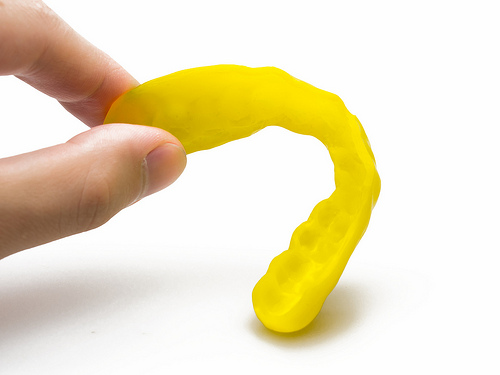
It's springtime and it's again time to remind our patients at Hoybjerg Orthodontics to protect their faces and pearly whites while out on the field playing sports. According to the National Youth Sports Safety Foundation, children, high-school athletes and adults have more than 5,000,000 teeth knocked out in sporting events annually.

If you are planning on participating in spring sports, it’s imperative to have a proper-fitting mouthguard. Mouthguards can prevent chipped or broken teeth, lip and cheek injuries, jaw fractures, mouth lacerations and even concussions.

Having a mouthguard can make the difference between losing your teeth or not, and because many of our patients who play high school sports have jaws that are still growing, last year’s mouthguard may no longer fit as it should. Dr. Adam Hoybjerg and our team at Hoybjerg Orthodontics can fit you for a new guard.

To learn more about mouthguards or for general questions about your treatment at our Yuba City office, please give us a call!

Does my child need two-phase treatment?

March 27th, 2019

You might be surprised to see one of your second grader’s friends with a dental appliance. Isn’t orthodontic work just for teenagers? And, if not, should your seven-year-old be sporting braces right now? The answer to both of those questions is “Not necessarily.” Two-phase treatment is a process designed to correct issues that arise during different times in your child’s life.

First Phase Treatment

We recommend that every child have an orthodontic evaluation around the age of seven to determine if there is a problem that would benefit from early treatment. First phase orthodontics is not the same as orthodontics for older patients. The focus here is on the developing bone and muscle structures which form your child’s bite and provide space for the permanent teeth when they arrive.

There are some clear-cut orthodontic goals that are much easier to attain when children’s bones are still growing.

  • Reducing Crowding

If your child’s mouth is small, the permanent teeth will have little room to fit in when they arrive. We may recommend gently enlarging the upper dental arch with the use of a palatal expander. This device will provide room for the adult teeth, and could potentially shorten second phase treatment time. Sometimes the extractions necessary to create more room for permanent teeth in later years can be avoided, as well as the possibility of an impacted tooth—one which doesn’t erupt because it is blocked by other teeth.

  • Dealing with Jaw and Bite Concerns

Bones and muscles do not always develop properly, leading to problems with jaw and facial structure. Your younger child still has growing bones, so this is a great time to gently re-form the jaw into a healthy shape. Problems caused by crossbites, underbites, open bites, and other malocclusions can be reduced with early treatment.  

  • Protecting Teeth

If your child has protruding front teeth, these teeth are more likely to be damaged in falls, at play, or while participating in sports. We can gently reposition them.

Second Phase Treatment

Second phase treatment is designed for your older child. After a resting period, when the permanent teeth finish erupting, we should see your child to evaluate any further orthodontic needs. This is the time to finish the process of straightening the teeth and making sure that each tooth fits together properly for a comfortable and healthy bite. This phase usually makes use of braces or aligners, and can take approximately 12-24 months.

Two-phase treatment is not necessary for every child. But there are some unique reasons that early orthodontics might be recommended for your child, even if it’s clear that more orthodontic work will be needed later. Make an appointment with Dr. Adam Hoybjerg at our Yuba City office, and let’s evaluate your child’s orthodontic needs, whether now or in the future, for a lifetime of beautiful smiles.

Do I really need to wear my rubber bands with my braces?

March 20th, 2019

Most of our patients at Hoybjerg Orthodontics will need to wear rubber bands at some point during their orthodontic treatment. The main reason our patients are instructed to wear rubber bands is to correct their bite. If your teeth do not fit together properly, Dr. Adam Hoybjerg will recommend that rubber bands be used. Dr. Adam Hoybjerg may also recommend using rubber bands to close or open spaces.

Rubber bands are a critical part of your treatment, and wearing them as Dr. Adam Hoybjerg and our team recommend will help move your teeth into the desired position. Dr. Adam Hoybjerg may ask you to wear your rubber bands full time, meaning that they should only be taken out when you brush and floss your teeth three times a day. Other times, you may be asked to only wear them part-time, like only during the day or only during sleep.

If you still have any questions about orthodontic rubber bands, we invite you to give us a call or ask us during your next adjustment appointment. Remember, wearing rubber bands as prescribed by Dr. Adam Hoybjerg is an important step during your treatment, and can reduce the time you have your braces. If you lose your rubber bands or run out, stop by our Yuba City office and pick up more!

50

Advanced Degrees

50

Locations

50

Name on the door