Our Blog

Protecting Your Smile with Mouthguards

April 28th, 2021

If you participate in sports or other physical activities, it’s wise to consider getting a mouthguard. Also known as mouth protectors, mouthguards are a device worn over the teeth to lessen the impact of a blow to the face.

This reduces the chance that you might lose teeth or sustain other serious oral injuries. We recommend that all patients involved in a contact sport such as wrestling, football, or hockey wear a mouthguard because of the high risk of such injuries.

However, anyone involved in a physically demanding sport or activity should wear a mouthguard as well.

Can you imagine what it would be like to lose a few of your front teeth? The way you talk, eat, and smile would all change. Potential injuries when you don’t wear a mouthguard include chipped and broken teeth, fractured jaws, root damage, damage to crowns and bridgework, concussions, and/or injury to the lips, cheeks, or gums.

Types of Mouthguards

There are three different types of mouthguards — typically made of a soft plastic material or laminate. You can decide which works best for you in terms of budget, fit, and comfort.

  • Stock mouthguards are prefabricated to a standard size. They offer adequate protection, but you need to make sure you find one that fits properly and comfortably. Stock mouthguards are readily available at department stores, sporting goods stores, and online.
  • Boil-and-bite mouthguards are placed in boiling water to soften them, then into the mouth so they can conform to the shape of the teeth. Boil-and-bite mouthguards are more expensive, but offer a more customized fit than stock ones. You can find these in department stores, pharmacies, sporting goods stores, and online.
  • Custom-made mouthguards are created just for you by Dr. Adam Hoybjerg. These offer the best fit and comfort of all the options, but they are also the most expensive. Ask a member of our Yuba City team for more information.

The American Dental Association says a good mouthguard should be easy to clean, fit properly, be comfortable, and resist tearing or damage. It shouldn’t restrict speech or breathing.

Still not sure if you need a mouthguard or which kind is right for you? Ask Dr. Adam Hoybjerg or one of our staff members for more information.

Taking Charge of Your Dental Health

April 21st, 2021

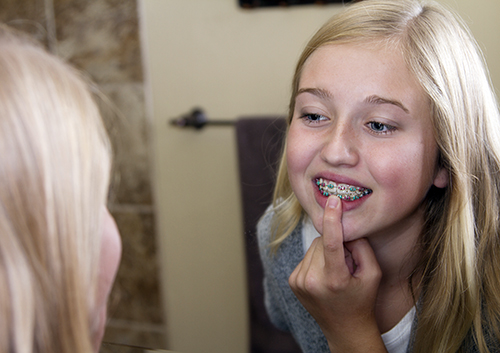
Now that you’re a teenager, you have a lot more responsibility and independence. Choosing high school classes and electives. Getting a driver’s license. Landing your first job. And those new responsibilities extend to your dental health as well!

  • Braces

If you’ve just gotten braces, you might feel a bit overwhelmed. Learning how to brush and floss effectively, attaching rubber bands several times a day, keeping track of your hours if you’re wearing clear aligners—it can seem like a lot. But you can do it! With time and practice, caring for your braces will become just another part of your daily routine. Dr. Adam Hoybjerg and our team are here to make sure you have all the information and tools you need to succeed. The most important thing to remember is that the better you follow our instructions, the quicker and more effective your orthodontic treatment will be.

  • Retainers

If you’ve successfully completed your orthodontic treatment, dealing with your retainer should be a piece of cake! We will give you clear instructions on how long each day you should wear your retainer. Sticking to this schedule is really important--if you don’t wear the appliance as directed, you can undo some of the progress you’ve worked so hard to make. And when you’re not wearing your retainer, be sure it has a safe life outside your mouth. Keep it in a protective case, and keep it someplace where the puppy/the washing machine/the cafeteria trash bin won’t find it.

  • Mouthguards

If you have a mouthguard for sports or athletic activities, wear it! Whether you have an over-the-counter device or a custom fabricated guard, it won’t do you any good hiding in your locker. A mouthguard cuts down on tooth and facial injuries caused by falls, physical contact, or other accidents that might happen in your active life. And if you wear braces, ask about a mouthguard designed to fit around them. These custom devices protect your braces and your mouth.

Finally, remember that sticking with your dental routine—two minutes of brushing morning and night and thorough flossing each day—will keep your gums and teeth healthy throughout your teen years. And, if you have any questions about your dental health in general, or a specific dental concern, give our Yuba City office a call! We’re here to work with you for a lifetime of beautiful smiles.

Plaque Attack? Let’s Fight Back!

April 14th, 2021

Plaque is a sticky subject! It sticks to the enamel of our teeth above and below the gum line, and it collects around braces. Plaque is one of the major causes of tooth decay and gum disease, and our teeth are under daily attack by this filmy menace.

What are the facts about plaque, and how can we fight back? Read on for some effective strategies!

What Is Plaque?

Plaque is a sticky film that builds up on our teeth, largely made up of millions of different types of oral bacteria. Plaque is a colorless biofilm at first, but as it collects, it takes on a white or yellow tint. If you haven’t brushed for a few days, that fuzziness you feel on your teeth is plaque build-up. Unless it’s removed, plaque hardens within a matter of days to become tartar.

  • Tip: You can remove plaque with careful brushing and flossing, but it takes a dental professional to remove tartar. Be proactive!

Why Does Plaque Cause Cavities?

Bacteria in plaque use our food as their food, especially sugars and carbs. They can then transform these nutrients into acids, which attack our tooth enamel, weakening it and leaving it vulnerable to further erosion and eventual decay.

  • Tip: Cavities aren’t the only damage caused by accumulated plaque. Plaque also collects along and below the gum line. If tartar forms here, it irritates delicate gum tissue, leading to gingivitis and more serious gum disease. Make sure you don’t forget your gums when you brush and floss.

When Does Plaque Build Up?

The short answer? Plaque is always forming, because oral bacteria are a natural part of our biology. (In fact, there are even oral bacterial which are beneficial.) Plaque starts building up within minutes after eating, and during the night as we sleep.

That’s why we recommend brushing for two minutes at least twice a day, and flossing at least once a day. When you wear braces or aligners, brushing more often is a good idea. Food collecting around braces or inside aligners is a feast for plaque! Ask Dr. Adam Hoybjerg for suggestions for your best brushing schedule.

  • Tip: Just because plaque is unavoidable, that doesn’t mean we need to give the bacteria in plaque any additional encouragement. Every time you have a meal or a snack that’s heavy in carbs and sugars, you are providing more fuel for acid production. Cutting down on foods like sugary desserts and sodas is not only nutrition-healthy, it’s tooth-healthy!

Where Does Plaque Collect?

Plaque builds up all over tooth surfaces, at the gum line, and even below the gum line. It’s especially easy to miss in hard-to-reach places like the irregular surfaces of molars, between the teeth, behind our front teeth, and near the gum line. Plaque also collects around your braces, and requires special care to make sure your teeth don’t suffer cavities or the white spots caused by demineralization.

  • Tip: One of the ways plaque avoids detection is its invisibility. Fortunately, if you’re having trouble brushing away all your plaque, there are plaque-disclosing toothpastes and chewable tablets available in the dental aisle which reveal the plaque hiding between, behind, or around your teeth by tinting it with a can’t-miss color. Just brush the color away, and you’ve brushed the plaque away as well.

How Do We Clean Away Plaque?

Use the Right Tools

Floss at least once a day. There are different materials, sizes, and coatings for floss, so you can find one that’s comfortable for you. Floss reaches those spots in between teeth and around the gum line that brushes miss.

Choose a soft toothbrush (soft bristles are better for your enamel) and change it every three to four months, or as soon as the bristles show wear. Make sure the head is the right size—too big, and it’s not only uncomfortable, but you won’t be able to reach all the surfaces you need to.

  • Tips: There are special dental flosses created just for your braces. You can also use interproximal brushes water flosser to clean around wires and brackets. If you have trouble removing plaque around your teeth and braces with a manual toothbrush, consider an electric model. Several studies have shown a reduction in plaque with the use of an electric brush.

Use the Right Toothpaste

There are many toothpastes specifically formulated to fight plaque and tartar. And fluoride toothpastes not only fight cavities, they can strengthen your enamel.

  • Tip: Studies have shown that toothpastes with baking soda, in particular, are effective in reducing plaque. Ask Dr. Adam Hoybjerg for a recommendation the next time you’re at our Yuba City office.

Use the Right Technique

What not to do?  A forceful, horizontal sawing motion is awkward, hard on your enamel, and misses plaque and debris between the teeth. Technique is important—not for style points, but for cleaner teeth!

Hold your toothbrush at a 45-degree angle, especially at the gum line, to gently remove plaque from teeth and gums. Use short strokes or a circular motion to clean as much of the surface and between the teeth as possible. Brush the inside of your front teeth with careful vertical strokes—remember, that’s one place where plaque is easy to overlook. The same holds true for the tops of your molars, so thoroughly clean those uneven surfaces.

If you wear braces, be sure to clean thoroughly around brackets and wires, where plaque can accumulate quickly.

  • Tip: If you wear clear aligners, don’t forget to give them a gentle brushing as well! Plaque can stick to aligners, causing discoloration and odors, so follow our cleaning instructions carefully.

Who Can Help You Fight Plaque?

Even when you do your best at home, plaque can still be a sticky problem. That’s why we advise regular professional cleanings, which not only remove any plaque that’s hiding away, but also eliminate any built-up tartar around your braces. And, of course, there you can learn all about how to keep your teeth their cleanest.

True, you’re fighting plaque every day, but you have all the tools you need to make sure your teeth and gums stay healthy. You’re winning the battle with plaque every time you eat a nutritious meal, and every time you brush and floss. With that kind of strategy, plaque doesn’t stand a chance. And your bright smile and healthy teeth and gums? That’s a victory worth celebrating!

How Braces Can Work at Any Age

April 7th, 2021

Are you an adult who is considering getting braces? Perhaps you’ve had them before, but over the years that dental work has been reversed. Or maybe you’ve never had any orthodontic work done, but are considering braces for the first time. In either case, Hoybjerg Orthodontics can help you enjoy straighter teeth, an improved bite, and a more beautiful smile. If you are considering getting braces, here is what you need to know about adult orthodontic work from Dr. Adam Hoybjerg.

Can braces work for adults?

Absolutely! Braces work for just about anyone. However, there are several different types of braces, and not all of them may work for you. Different types of orthodontic treatments include:

  • Ceramic braces
  • Metal braces
  • Self-ligating brackets
  • Lingual brackets (braces behind the teeth)
  • Invisible braces
  • Rubber bands for bite correction
  • Headgear and other appliances

By scheduling a consultation, we can determine which treatment or combination of treatments would be best for your specific needs.

How do I get started?

Getting braces can be a little bit daunting. At first glance, the process may appear expensive and time-consuming. However, if you take it step by step, getting braces can be a simple and relatively pain-free experience. Here are the first steps you need to take to get on the road to straight teeth:

First, you need information. If you are nervous about getting braces, or are having trouble getting started, learning more about the process can help ease your mind. Here are a few sample questions to ask:

  • What kind of braces do you recommend for my teeth?
  • How long will the treatment take?
  • How often will I need to come in for adjustments?
  • What is the total cost of the treatment? Do you accept insurance? Will you require the full amount up front, or do you have payment plans?

Asking these types of questions will help you understand what to expect during the entire process, which can aid your decision on the proper course of action.

The next step is to complete any prerequisite treatment. During your first meeting with Dr. Adam Hoybjerg, we’ll need to take some X-rays and molds of your teeth, and then help you determine an appropriate treatment plan. Recommendations may include some preliminary dental work before you get your braces, which can be an important step in making sure your orthodontic treatments are effective.

Once you have completed these steps, you are ready to get started! After you’ve chosen a treatment plan and undergone any necessary prerequisite dental work, you’ll be able to get your braces. Just like that, you’re on your way to a better smile! If you’d like to get started right away, call our Yuba City location today!

50

Advanced Degrees

50

Locations

50

Name on the door