Our Blog

Pick the right electric toothbrush!

August 25th, 2021
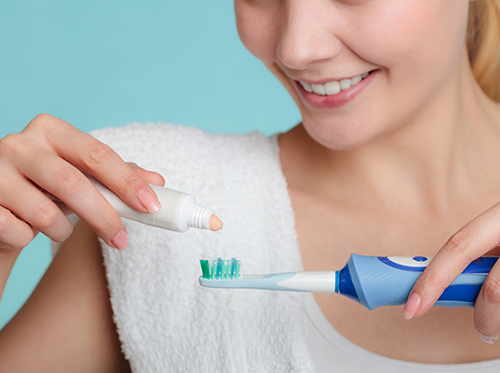
The electronic toothbrush has undergone several technological advances since the 1960s. Everything from design and bristle motions to rotation, oscillation, and sonic vibration has led to dramatic changes in this necessary tool over time.

Rotation oscillation happens when the head of the toothbrush rotates from one direction to the other. The benefit of powered toothbrushes is that they can produce 50,000 strokes per minute, compared to 300 strokes with a manual toothbrush.

When you’re thinking about brush head size, smaller brush heads are best for hard-to-reach areas and small mouths. Brush heads should be replaced every three to six months as needed. A good way to save money is to designate a brush head for each family member which can be taken on and off a shared base motor.

Having a base motor or rechargeable toothbrush can deliver enough power on a full charge for a week of brushing, which makes it convenient for travel or when life gets busy. Some toothbrushes include audible signals that let you know when to switch the area of your mouth you’re brushing or when a full two minutes has gone by.

Do you have sensitive teeth? Studies have indicated that people tend to apply more pressure on their teeth when they use a manual toothbrush. This makes an electric toothbrush a preferable option if you’re having issues with sensitive teeth or gums.

There are even electric models with pressure sensors that will stop the brush from spinning when you press too hard against your teeth!

Everyone can benefit from having an electric toothbrush. A large handle size can be taken into consideration if a member of the household is young, or has a physical disability or arthritis. They’re even recommended for children in order to maintain good oral hygiene from a young age.

Biofilm is a term used for plaque or debris that builds up in your mouth. If not properly addressed, this can cause serious bacterial infections to your gums and teeth. If you want to remove biofilm in the most efficient way, an automatic toothbrush is the way to go.

When you're ready to make your decision, make sure to consult with Dr. Adam Hoybjerg at our Yuba City office to decide which electric toothbrush is right for you!

Gums and Braces

August 18th, 2021

“Yes,” you’re thinking, “I shouldn’t be chewing sugary, sticky gum while I’m wearing my braces.” Or perhaps, “I should check with my orthodontist to see if this sugar-free gum is safe for my braces.” And these are both great thoughts—but today, we’re thinking about gums of a different sort!

While you’ve been taking care of your teeth with regular brushing and flossing, you’ve also been taking care of your gums. And now that you’re wearing braces, your gums need a bit of special attention to keep them their healthiest.

We tend to think of gum disease as an adult problem. In fact, periodontitis, or serious gum disease, is one of the most common chronic infections in the adult population. But young gums need care, too! Gingivitis, a milder form of gum disease, is unfortunately a common problem for both children and adults.

Gingivitis is an inflammation of the gums caused by the build-up of plaque and tartar. When plaque builds up, it irritates delicate gum tissue. And while gingivitis is not as serious as periodontitis, the symptoms caused by this disease are nothing to smile about:

  • Redness
  • Tenderness and soreness
  • Swelling
  • Bleeding
  • Bad Breath

If you’re already feeling a little tender or swollen after an adjustment, the added discomfort caused by gingivitis is the last thing you want. But even worse, neglected gingivitis can lead to more serious infections of gum and even bone tissue. Luckily, gingivitis is both preventable and treatable with proper dental care.

So, how to protect your gums? We have some suggestions.

  • Brushing Better with Braces

It can be hard to brush around your brackets and wires, but keeping these areas free of food particles and plaque makes for healthy gums—and fewer cavities! There are specially designed manual toothbrushes made for braces wearers, and tiny interproximal brushes that can reach tight spaces. Or, perhaps an electric toothbrush will do a better job for you. Just be sure to brush after each meal for the most complete removal of bacteria and plaque.

  • Learn New Flossing Techniques

You might wonder how on earth you’ll get in between your teeth with your wires and brackets in the way. We have the answers! We know the best techniques for flossing your specific braces, and we’ll recommend specially designed flossing tools to make the job easier. Water flossers can also be a great help for cleaning in tight spots. Be sure to make flossing part of your daily routine—you’ll be able to remove plaque from places brushing just can’t reach.

  • Rinsing? Recommended.

Talk to Dr. Adam Hoybjerg about the best dental rinses for reducing plaque and tartar, or how gargling can help prevent irritation. And drink water! Water helps wash away plaque and bacteria, and is a great way to rinse teeth and braces if you absolutely can’t brush after eating.

  • Keep up with Professional Cleanings

Be sure to keep up with your regular dental exams and cleanings. Your dentist or hygienist will be able to remove any plaque or tartar build up that home brushing can’t handle.

We want your time in braces to be as healthy—and comfortable—as possible. If you have any gum discomfort, swelling, or sensitivity, give our Yuba City office a call. With prompt action, gingivitis can be treated, and with careful attention to your cleaning routine, gingivitis can be prevented altogether. Something to think about!

Orthodontic Myths

August 11th, 2021

Some myths never wear out their welcome. If the Tooth Fairy helps your child transition from baby teeth to adult teeth, more power to her! On the other hand, some myths we can do without. Here are five common misconceptions about orthodontics, and the reality behind the myth.

  • It’s Only Cosmetic

If you think orthodontists can make a crooked smile straight, you’re right! Creating a beautifully aligned smile is one of our specialties. And if your primary interest is in a straight, even smile for you or your child, that’s a good thing. You can’t underestimate the confidence a beautiful smile brings. But please don’t think that’s all we do. In orthodontics, aesthetics and function work together. An essential part of an orthodontist’s work is diagnosing and treating malocclusions, or bad bites. The correct alignment of teeth and jaw is what makes a beautiful smile a healthy one as well.

  • I Don’t Need an Orthodontist for Orthodontic Treatment

All dentists receive comprehensive training and experience in order to earn their dental degrees. But did you know orthodontists like Dr. Adam Hoybjerg receive two to three years of additional formal training, concentrating specifically in the field of orthodontics? An orthodontist is a specialist, and diagnoses and treats problems with tooth alignment while taking into account dental, jaw and facial development. That is why an orthodontic specialist is best qualified to create a unique, custom-tailored treatment plan for each patient in order to achieve a beautiful, balanced, and healthy smile.

  • My Child is Too Young for Orthodontic Treatment

We actually recommend that every child see an orthodontist for an evaluation by the age of seven. It’s important to be aware of any potential orthodontic problems that might affect your child’s later years, but we can also treat problems even before braces are on the horizon. If your child’s mouth is very small, we may recommend gently enlarging the upper dental arch with the use of a palatal expander to accommodate adult teeth as they erupt. If a baby tooth is lost too soon, we can provide a space maintainer so your child’s permanent tooth can erupt in the right place. We can even treat bite problems before all the adult teeth arrive. A visit when your child is young might help prevent the need for more complicated treatment in the future.

  • I’m Too Old for Orthodontic Treatment

You’re really not. As long as your teeth and gums are healthy, orthodontic treatment is a great way to keep them healthy. Crowded teeth and malocclusions can lead to problems like worn or cracked enamel, headaches, jaw problems, increased tooth decay, and periodontal disease, to name but a few. And today’s orthodontics offer a much wider variety of treatment options than the metal gear you remember from your high school days. Which leads us to our last myth of the day:

  • Those Metal Braces Aren’t for Me

In that case, it’s a good thing we have many other options to offer. Ceramic brackets and clear elastic ligatures make traditional braces much less visible. Lingual braces use brackets and wires placed behind the teeth, which are almost impossible to detect. And clear aligners allow you to subtly reposition your teeth with each new aligner tray—and are removable if need be. In fact, even those metal braces you might remember from your own high school days have gotten smaller and sleeker. Talk to us about the many discreet options available for older and younger patients.

If you are interested in what orthodontics might do for you, give our Yuba City office a call! We are here to help you discover what’s possible and then to design the best possible treatment plan in order to achieve it.  Let’s make your beautiful, healthy smile a reality!

Water Flossers and Braces

August 4th, 2021

You devote a lot of energy to your orthodontic treatment. Appointments, rubber bands, adjustments, cleaning (so much cleaning)—and why? Because you know that your attractive, healthy smile will be well worth the effort.

But if you find that keeping your teeth and braces clean requires more time and energy than it should, and you’re still not getting the results you’d like, a water flosser might be just the tool you need to help make your cleaning routine easier and more effective.

Plaque and tartar can be a real problem when you wear braces. Cleaning around braces and wires can be a challenge, and it can be difficult to get floss between your teeth and close to your gums, even with special threaders or floss designed to slip behind your wires.

But ignoring bacteria and plaque build-up can lead to cavities, weakened or discolored enamel, and gum problems. Fortunately, a water flosser can help wash away food particles, bacteria, and plaque even in tight, hard-to-reach spaces, while providing gentle cleaning along sensitive gums.

Water flossers use a pulsing stream of water to remove food particles and plaque between and around teeth. You can adjust the water pressure to apply just the right amount of cleaning power, and then direct the flow to your gum line, between your teeth, around your brackets, or anywhere else you need. Some models even offer tapered heads with brushes designed specifically for cleaning braces.

You might consider investing in a water flosser if you have:

  • Mobility issues. If you have joint or mobility issues, a water flosser will let you clean those hard-to-reach areas more easily.
  • Lingual braces. Because lingual braces are on the inside of the teeth, they can be more difficult to clean effectively with regular brushing and flossing.
  • Problems removing plaque. If you find that you are brushing and flossing regularly, but still have plaque build-up around your braces, give water flossing a try.

A beautiful smile is well worth all the time and effort you are devoting to it. If you think a water flosser might save you a bit of that time and effort, and provide better cleaning power, talk to Dr. Adam Hoybjerg  about your options during your next visit to our Yuba City office. We’ll let you know if traditional flossing, a water flosser, or a combination of the two will give you your cleanest, healthiest smile.

50

Advanced Degrees

50

Locations

50

Name on the door